Block a phone number: iPhone, Android and operator
How to block a number on iPhone, Samsung or through a Belgian operator: the steps, the limits, and what Proximus, Orange and BASE really do.
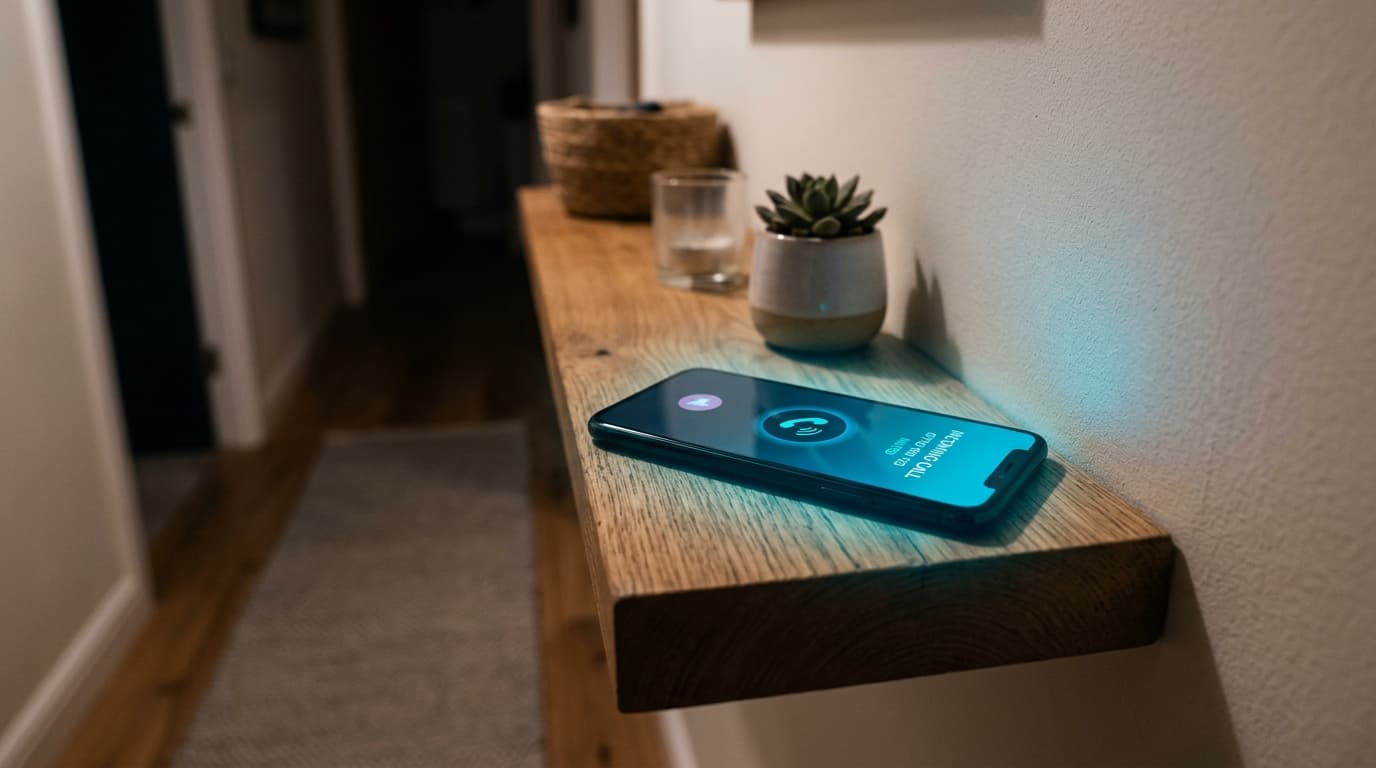
To block a number, use the phone itself: on an iPhone, Recents then "Block this Caller"; on a Samsung, Recents then "Block". It is free and immediate. Your Belgian operator, for its part, does not in principle block incoming calls for you, and Proximus says so in black and white for foreign numbers.
Blocking a number means telling the phone to refuse calls and messages from one specific line, or from a whole category of callers. The setting lives in the device, not on the network. Everything else in this article follows from that.
How do you block a number on an iPhone?
Three taps from the call list are enough.
- Open Phone, then Recents.
- Tap the circled "i" to the right of the number.
- Scroll down, tap "Block this Caller" and confirm.
The same command exists in Messages and in FaceTime. To review or undo your blocks, go to Settings, Phone, Blocked Contacts. According to Apple, unwanted callers are redirected to voicemail.
A second option, blunter, silences every unknown caller (Settings, Phone). Then only your contacts ring, plus the numbers you called recently and those Siri suggests. The doctor calling back from a new number, the courier, the school: all of them land on voicemail.
How do you block a number on a Samsung or another Android?
Samsung describes two routes on its help page. The first goes through Recents: tap the information icon next to the number, then "Block". The second goes through the Phone app settings: three-dot menu, Settings, "Block numbers", then add the number with the plus sign. The same screen has a switch for unknown or private numbers.
Other brands use other labels. Futura-Sciences (6 November 2024) describes the same logic: Phone app, options, Settings, blocked numbers, with a switch for unknown callers. BASE sums up the same idea in its help: an automatic rejection list in the call settings. Labels depend on the brand and the Android version, so look for the word "block" in your Phone app settings rather than a path learned by heart.
Samsung specifies that calls and messages from a blocked number are no longer received. The call disappears from your history.
Can you block a private or masked number?
Yes, but with the same bluntness as on an iPhone: the setting targets all unknowns, not one. In Belgium a caller hides their number by dialling #31# before it, a European code handled by every Belgian operator (CallMePower, page updated on 22 July 2026). Emergency services and the Poison Centre (070 245 245) see the number anyway.
A masked number cannot be identified afterwards either: only the Telecommunications Ombudsman Service can, on a complaint, ask the operator for its holder. Our guide on the unknown number that rang only once details that route.
What does your operator block for you?
Very little for the calls you receive. Here is what Belgian operators' help pages say, checked on 4 October 2026.
| Lever | Who | Cost | Target | Limit |
|---|---|---|---|---|
| Blocking on the phone | You | 0 euros | One number, or all unknown and private callers | A new number gets through |
| Orange Phone app | Orange (own mobile network, plus the Walloon cable ex-VOO) | Free | Spam reporting and blocking, price of premium numbers shown before the call | Relies on reports, not a network filter |
| Premium call restriction | Proximus, Orange, Telenet and BASE | Free | Your outgoing calls to 090x, and depending on the operator 07x | Outgoing only |
| International call barring | BASE (via My BASE or 1999) | Not stated on the page | Your calls and texts abroad | Does not stop you being called |
| Blocking of foreign numbers | Proximus | Not applicable | Nothing | "Neither Proximus nor the telecom ombudsman" can do it |
| Number change | Proximus | Mobile 0 euros, landline 33.28 euros | Everything, including the old number | You lose yours |
Sources: help pages of Proximus (own copper, fibre and mobile networks), BASE (Telenet group, own cable in Flanders and Brussels) and Orange, consulted on 04/10/2026.
Proximus's sentence deserves reading in full: on its help page the operator writes that neither it nor the telecom ombudsman can block foreign numbers for you. It points to blocking on the smartphone, to the "Ne m'appelez plus" (Do Not Call Me) list for sales calls, and to a new number as a last resort.
One detail from subscriber memory: in April 2017, RTBF quoted a paid anonymous-call rejection service at Proximus, at 2.99 euros a month. The current help page on unwanted calls no longer mentions it. If you are looking for that service, ask customer service before counting on it.
For premium-rate numbers, operator blocking does exist, and it is free, but it only protects your outgoing calls. The detail is in our guide to premium-rate numbers.
A number that changes on every call beats the block
A block remembers a number, not a person. On 15 May 2023 a subscriber wrote to Test-Achats that Proximus was calling her several times a week with offers she refused: "no matter how often I tell them and block the numbers, they call again each time from another number". Proximus replied on 24 May, then on 30 June that its departments had been told to stop bothering her. Case closed on 5 July 2023.
Do the sum with one call a week from a different number: fifty-two entries in the block list in a year, none of which will ever be used twice. The list grows, the problem stays.
Which mistakes make a block useless?
- Blocking the number on a single phone, when the same caller also reaches the landline and the other mobile in the household.
- Switching on silence for all unknown callers, then missing a call from the doctor, the school or a courier.
- Calling back "just to see" before blocking: that is exactly what a one-ring call is after.
- Believing the operator filters at the source, when its help page says the opposite for foreign numbers.
- Forgetting to note the date and time of the calls, after which no complaint holds up.
How do you protect a whole household?
Count the lines first. A household with one landline and four mobiles, spread across Proximus, Orange and Telenet or BASE, has five settings to change, one per device or SIM card, because the help pages consulted describe no block shared across all the lines of a bundle. An operator's app, for its part, only protects the phones on which you installed it.
The landline follows another logic: it is the handset that blocks, not the box. Our comparison of the cordless landline that blocks cold calls says what each model can do.
For lawful sales calls, registering on the "Ne m'appelez plus" list stays separate from blocking, and it is done number by number: see what it really changes.
What if blocking is not enough?
Go up a notch, in this order.
First, note every call: date, time, displayed number. Then file a malicious-call complaint with the Telecommunications Ombudsman Service, using the form on its site. According to the Montgomery local police, at least three calls or messages are needed, unless there are death threats. The service blocks nothing, but it can obtain the line's holder and write to you with it. It cannot act on numbers from foreign networks, on calls older than twelve months, or on WhatsApp or Messenger.
If the harassment continues, the complaint goes to the local police with those records. Last resort: the new number, free for a mobile at Proximus and 33.28 euros for a landline (checked on 04/10/2026).
How do you unblock a number?
On an iPhone: Settings, Phone, Blocked Contacts, then swipe the number left and tap "Unblock". On a Samsung: go back to "Block numbers" and remove the entry.
Sources: help pages of Proximus on unwanted calls and texts and BASE, consulted on 04/10/2026; Apple, filter and block calls; Samsung, block certain incoming calls; Local police, procedure to identify a harasser and victim of telephone harassment; RTBF, call blockers (26 April 2017); Test-Achats, public complaint of 15 May 2023; Orange Belgium, launch of the Orange Phone app (31 January 2023).
Frequently asked questions
Maxime suit le marché télécom belge depuis dix ans. Il épluche les grilles tarifaires de Proximus, Orange, Telenet, VOO, BASE et des MVNO pour traduire le jargon (VDSL, câble, Easy Switch, 4play) en conseils utilisables.