Do Not Call Me list: does it really protect you?
Belgium's Do Not Call Me list: free sign-up in 5 working days, number by number. What it stops, what still gets through and where to complain.
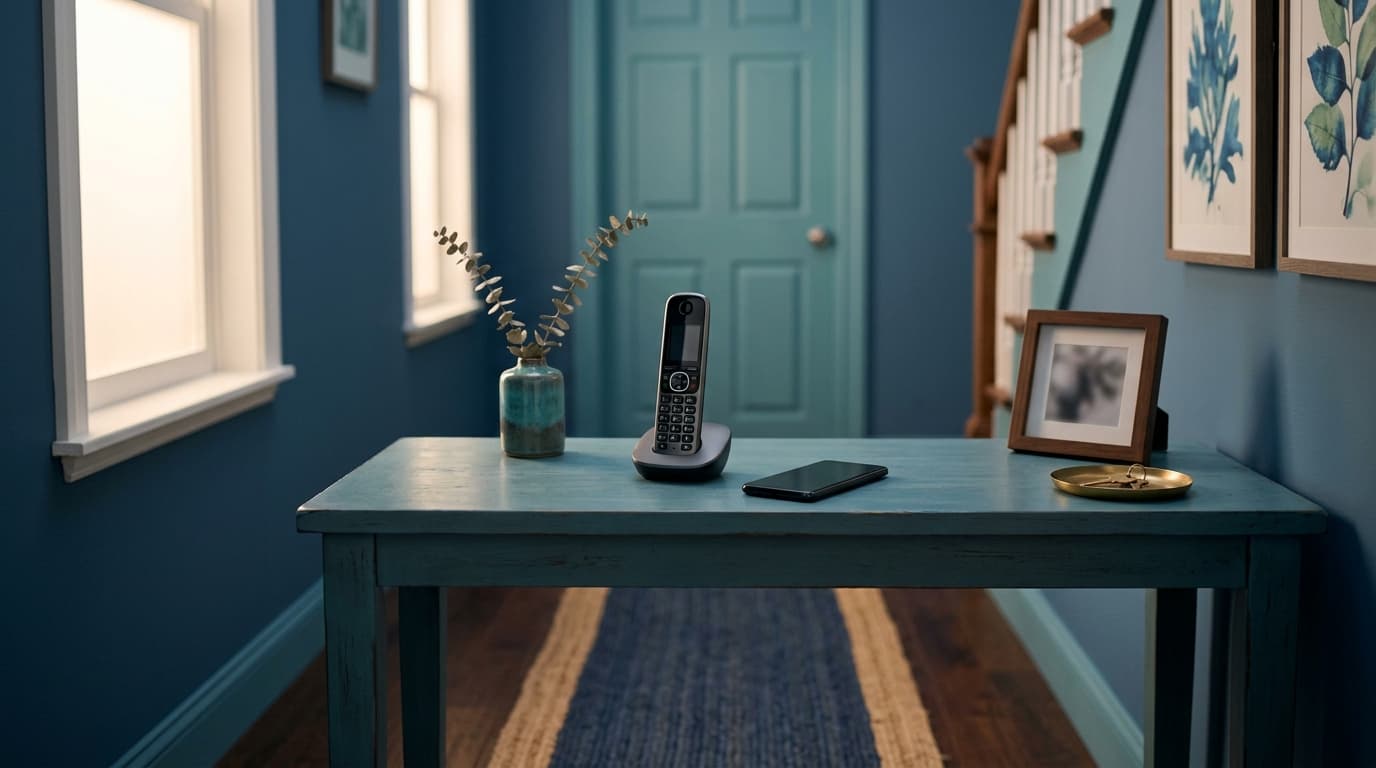
The "Ne m'appelez plus" (Do Not Call Me) list stops sales calls from companies that respect it, and only those. Registration is free, active within five working days, and has to be repeated for every number in the household. It does not stop scams or foreign call centres, and Belgium remains a country where a sales call is allowed until you have refused it.
The "Ne m'appelez plus" list is a file kept by the DNCM (Do Not Call Me) non-profit, in service since 2013 according to a local police page. Direct-marketing companies must remove registered numbers from their calling lists, on pain of a fine. The duty falls on the caller. Nothing is installed on your line.
1.4 million numbers registered, eleven fines in 2018
The number of registrations is the only statistic everyone quotes. More than 1.4 million numbers in October 2019, according to La Dernière Heure, more than 1.5 million in February 2024 according to La Libre. That is a lot. The same 2019 article also gives the other half of the picture, the half quoted less often.
| Year | Complaints received | Fines | Complaints per fine (calculated) |
|---|---|---|---|
| 2018 (full year) | 6,866 | 11 | 624 |
| 2019 (to early September) | 6,842 | 5, plus 1 warning | 1,368 |
Figures published by La Dernière Heure on 18 October 2019. I found no more recent release: failing that, these two lines are the only public measure of the gap between registrations and sanctions. Complaints-per-fine ratio calculated on 30 September 2026.
Eleven fines for nearly seven thousand complaints. The newspaper explains why plainly: international call centres using voice over IP, masked numbers, an identification chain that is hard to trace, and a jurisdiction that stops at the border. Most calls are never reported anyway, since few people bother to file a complaint.
So the list does what it says on paper, and the enforcement behind it stays thin.
How do you register on the Do Not Call Me list, number by number?
The procedure takes four steps, and the second is the one people forget.
- Pick up the phone, landline or mobile, whose sales calls you want to cut.
- Call 02 882 19 75 from that phone. The number you call from is the one that gets registered. Online registration goes through ne-m-appelez-plus.be.
- Wait five working days: that is the delay before the number appears on the list.
- Repeat from every other number in the household.
Registration is free, although the call itself is billed at your plan's usual rate (La Libre, 23 February 2024). It is permanent and can be changed or cancelled at any time.
One household, five numbers, five registrations
This is where the multi-subscription household collides with the list. It reasons by number, your bill by contract.
Take a typical bundle: one landline, two mobiles for the parents, two SIM cards for the children. That is five numbers, five calls to 02 882 19 75, each from the right phone. Whether the lines sit with Proximus (its own copper, fibre and mobile networks), Orange (its own mobile network, plus the Walloon cable inherited from VOO) or Telenet (its own cable in Flanders and Brussels, with the BASE brand in the same group) changes nothing: the list never asks who you are with.
The trap to avoid is the number that arrives after you registered. The line added to the bundle last month, the SIM card given to a teenager at the start of term, the landline taken over when moving: none of those numbers is registered until someone calls from it. A registration from 2019 protects the numbers of 2019.
In principle, the registration follows the number, since the list is kept by number and not by operator. I found no source confirming it for a number kept after a change of operator, though: after a porting, make the call again, five minutes is enough.
Why does a call get through despite the registration?
Four situations explain almost every case.
- You gave your consent. A signed contract, a questionnaire with a ticked box or a consent email is enough to make the call lawful (La Libre).
- The caller is not a direct-marketing company. A scammer checks no list, and the list does not bind them.
- The call comes from a foreign call centre or a masked number. This is the least controllable case, and the one the 2019 article cites first.
- The number is not registered. More common than people think, see the previous section.
A public Test-Achats file shows what this looks like. On 16 February 2024, a subscriber writes that he has been registered for more than six years and still receives calls from centres claiming to be Proximus, under first names that change from call to call: Sarah, Léa, Juliette. Proximus replies on 22 April 2024, contacts the subscriber again and removes his number from its marketing lists. The complainant stays sceptical about what follows: nothing says the call centre itself has stopped calling others.
The lesson is less comforting than the ending. The operator is the advertiser, the call centre a subcontractor, and the list applies to the advertiser.
One last benchmark on hours. According to La Libre, a compliant telemarketer does not call outside 9 am to 8 pm. I did not find that window in any legal text I consulted: take it as a rule of thumb, not as proof to hold against a caller.
Which number, which rule: Belgian sources contradict each other
Three sources consulted on 30 September 2026, three versions. The table puts them side by side, because the difference matters whether you register or complain.
| Source | Date | Registration number | Customer of the company |
|---|---|---|---|
| La Libre | 23/02/2024 | 02 882 19 75 | The call remains allowed if you gave explicit consent |
| FPS Economy, ConsumerConnect | consulted 30/09/2026 | 02 882 19 75 | Not specified |
| Local police (Germinalt page) | 25/02/2022 | 078/77 00 22, or ne-m-appelez-plus.be | Even companies whose customer you are must remove you |
The 078 on the 2022 page belongs to the special-rate numbers, whose series our premium-rate numbers guide breaks down. Two recent sources give the 02. Keep the 02 and check the website before calling.
On the rule that applies to customers, I do not take sides. The texts that set it are not in the pages consulted, and the two wordings are not compatible. For an operator, write that you refuse sales calls, keep the reply, and treat the list as a safety net, not a shield.
Can your operator keep calling you to sell a bundle?
For a household paying three subscriptions at two or three operators, this is the real question, and it has no single answer. A call offering a new bundle, an option or a promotion renewal is a sales call. If it comes from an operator whose customer you are, the debate is about consent: given in the contract, it makes the call lawful according to La Libre, without effect according to the 2022 police page.
Operators are not all in the same position day to day either, since each subcontracts its campaigns to its own call centres. The 2024 Test-Achats file illustrates it. Two steps are therefore worth more than waiting for a clear rule: write to each operator in the household that you refuse sales calls on each number concerned, and keep the reply. That letter costs nothing. It does not replace registration, it doubles it where the list leaves doubt.
Bloctel Belgium: the Belgian equivalent is called Ne m'appelez plus
Bloctel is the French scheme. Belgium has no copy of it: it is "Ne m'appelez plus", run by the DNCM non-profit, not by the State.
Opt-in was rejected in committee on 30 April 2026
A bill tabled in the Chamber on 3 October 2025 (DOC 56 1081/001) wanted to reverse the rule: no sales call without prior explicit consent, as for email and text messages. The BIPT/IBPT, the telecom regulator, gave its opinion on 25 November 2025: it welcomes the initiative and asks for the text to be adapted to article 106/2 of the law of 13 June 2005 on electronic communications, which falls within its remit.
The committee report is dated 30 April 2026. The bill was rejected, by 11 votes to 3 with one abstention. The same report notes that the current opt-out is seen as not very effective, in particular against anonymous and foreign call centres. A text judged insufficient by those who reject the change, then, and which nonetheless remains the rule.
Practical consequence: in 2026 you cannot count on a general ban. Registration is a voluntary act, to be repeated for every number.
What should you do when the phone rings anyway?
Four steps, in order.
First, note the date, time, displayed number and the name of the company given. Without those four items, a report leads nowhere. Next, ask the caller on whose behalf they are calling: a company working by the book answers, a scammer hangs up.
Then file a complaint on the FPS Economy contact point (pointdecontact.belgique.be, section "Démarchage téléphonique"), or phone 0800 120 33 Monday to Friday, 9 am to 5 pm. The contact point is also the address the local police gives for this case.
Finally, block the number on the phone. If the ringing targets the bundle's landline, our guide to the cordless landline that blocks cold calls says what the operator can do and what is set in the handset. If the number is masked or the call cut after one ring, it is no longer cold calling: see what to do about an unknown number.
To identify the caller before deciding, our guide on which operator owns a Belgian number explains what a prefix still tells you. And if the sales calls come from your own operator, our bundle ranking helps you compare before renegotiating.
Sources: FPS Economy / ConsumerConnect (unsolicited telephone advertising, consulted 30/09/2026); BIPT/IBPT (opinion of 25/11/2025 on the bill); Chamber of Representatives (DOC 56 1081, committee report of 30/04/2026); La Dernière Heure (18/10/2019); La Libre (23/02/2024); Test-Achats (public complaint of 16/02/2024); Local police (25/02/2022).
Frequently asked questions
Maxime suit le marché télécom belge depuis dix ans. Il épluche les grilles tarifaires de Proximus, Orange, Telenet, VOO, BASE et des MVNO pour traduire le jargon (VDSL, câble, Easy Switch, 4play) en conseils utilisables.