Belgium country code: what +32 no longer tells you
Belgium's country code is +32, the leading 0 drops, and 40 area prefixes map badly onto provinces — plus why a +32 number isn't proof of a Belgian call.
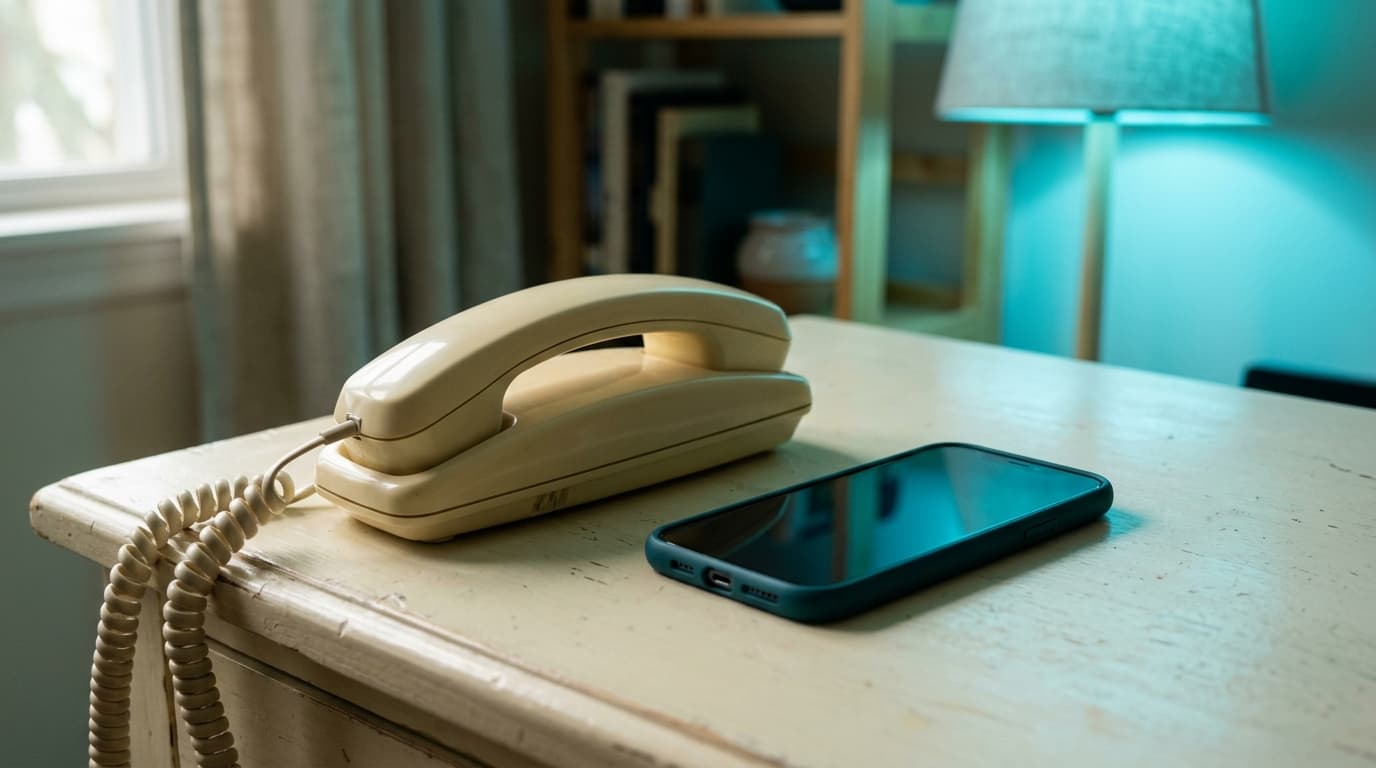
Belgium's country code is +32, or 0032 on a keypad without a plus sign. You then dial the Belgian number without its leading zero: 0470 12 34 56 becomes +32 470 12 34 56. That was the easy part. The rest of the number tells you far less than you think.
A country code identifies the country where a number was issued. An area code identifies the region where a landline was opened. Both exist to route a call, not to describe a person. That distinction is the whole point of this article, and it costs money to ignore.
+32, and the zero that drops
The leading zero of a Belgian number is not part of the number. It is a national prefix, a signal to leave the local area, and it only makes sense when you dial from inside Belgium. Put the country code in front and it disappears.
This one detail explains most calls that never connect. A +32 0470 12 34 56 copied off a business card will go nowhere. The correct form is +32 470 12 34 56 for a mobile, +32 2 123 45 67 for a Brussels landline.
There is a historical reason for that ever-present zero. Since 1 July 2000, Belgium requires the area code to be dialled even for a local call: a Brussels resident calling a neighbour still has to type 02. The country moved to what is called a closed numbering plan, and the number settled at nine digits for a landline, ten for a mobile. In plain terms: what you see on a shop front is already the complete number.
Which province sits behind an 02, an 071 or an 081?
None, if you take the question literally. Belgian telephone areas were drawn around telephone exchanges, not administrative borders, and they spill happily across the provinces. The table below groups them by province anyway, because that is how people search.
| Province | Area codes | Reference cities |
|---|---|---|
| Brussels-Capital | 02 | Brussels — and Enghien, which is in Hainaut |
| Antwerp | 03 · 014 · 015 | Antwerp, Herentals, Mechelen |
| Flemish Brabant | 013 · 016 | Diest, Leuven |
| Walloon Brabant | 010 · 067 | Wavre, Nivelles |
| West Flanders | 050 · 051 · 056 · 057 · 058 · 059 | Bruges, Roeselare, Kortrijk, Ieper, Veurne, Ostend |
| East Flanders | 09 · 052 · 053 · 054 · 055 | Ghent, Dendermonde, Aalst, Ninove, Oudenaarde |
| Hainaut | 060 · 064 · 065 · 068 · 069 · 071 | Chimay, La Louvière, Mons, Ath, Tournai, Charleroi |
| Liège | 04 · 019 · 080 · 085 · 087 | Liège, Waremme, Stavelot-Malmedy, Huy, Verviers |
| Limburg | 011 · 012 · 089 | Hasselt, Tongeren, Genk |
| Luxembourg | 061 · 063 · 084 · 086 | Libramont-Bastogne, Arlon, Marche-en-Famenne, Durbuy |
| Namur | 081 · 082 · 083 | Namur, Dinant, Ciney |
Forty areas in total, grouped by province from the national numbering plan of the BIPT (the Belgian telecoms regulator, IBPT in French) and the public list of Belgian prefixes. Checked in August 2026.
Three cases make the table lie, and they are the interesting ones. Enghien, a town in Hainaut, is wired to the Brussels 02. Mouscron, also in Hainaut, shares Kortrijk's 056. Voeren, a Limburg enclave, dials 04 like Liège. These are not mistakes: they are the fingerprints of a network built before the regional borders of 1970 and 1980.
A landline 04 and a mobile 04 are not the same thing
Count the digits. A Belgian landline has nine with its zero, a mobile has ten. 04 123 45 67 is a Liège landline; 0470 12 34 56 is a mobile that can ring anywhere in the country.
The prefix no longer tells you where your caller lives
That is the first floor of the demolition, and it is well under way. Number portability, in place since 2002, lets you keep your number when you change operator: a mobile prefix therefore only points to the operator that originally issued it. We covered that in which operator owns a Belgian number, along with the only tool that settles the question, the 1399 database.
The second floor is less well known. Portability also applies to landline numbers, and internet telephony did the rest: a VoIP provider can hand a 02 number to someone who has never set foot in Brussels, and moving from Namur to Ghent no longer forces anyone to change number. Test-Achats, the Belgian consumer organisation, has been flagging this in its VoIP file for years.
In practice: a freelancer who opened a line in Liège in 2011, ported it to a VoIP provider in 2019 and now lives in Antwerp still answers on an 04. The prefix records where a subscription was opened, not an address. If you were trying to locate a caller, you have just lost your best clue.
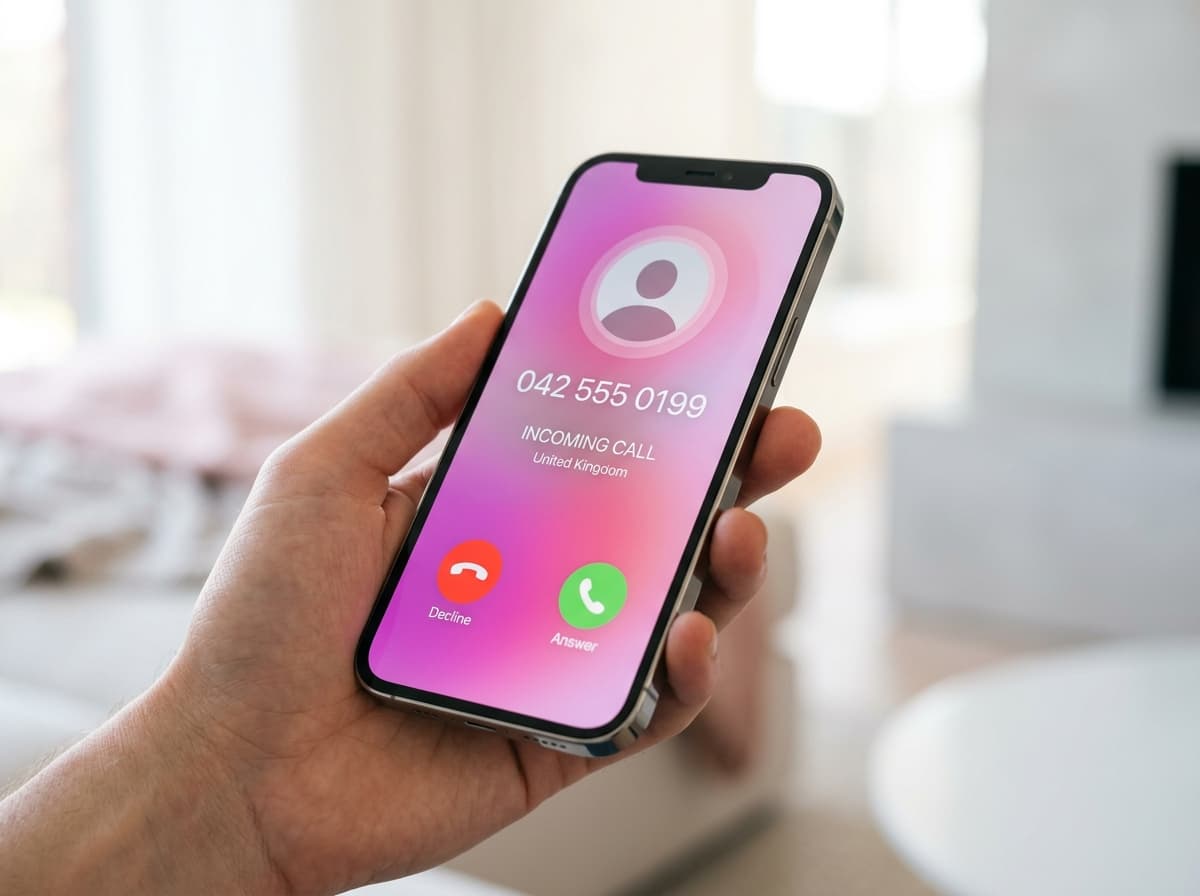
Is a number showing as +32 always Belgian?
No. The number on your screen is declared by the caller, much like the sender's address on the back of an envelope. Faking it is called spoofing, and it underpins nearly every phone scam in Belgium.
The objection is fair: if anyone can display anything, what is a numbering plan for? Belgium's answer sits in one precise text. The Royal Decree of 12 May 2024 requires operators to block international calls that present themselves with a Belgian number towards a Belgian number. It has applied since 1 September 2024 for geographic numbers and since 1 December 2024 for mobile numbers. The BIPT then consulted the market on a "do-not-originate" list, which would let banks and public bodies register the numbers they never call from.
Now the nuance, because it decides how you should behave: the filter does not cover everything. It targets calls arriving from abroad while carrying a Belgian number. It does not block a call genuinely made from Belgium using a Belgian number rented by a call centre, nor a foreign number displayed as itself, nor the virtual numbers handed out in bulk to platforms. Two years after the decree, reports of fake bank advisers calling from +32 numbers keep arriving on Belgian reporting platforms.
What does a call between Belgium and the rest of Europe cost?
At most €0.19/min excluding VAT and €0.06 per SMS excluding VAT. That is the European cap on intra-EU communications, in force since 15 May 2019 and confirmed by the European Commission. With Belgian VAT at 21 %, that works out at €0.23/min and €0.07 per SMS.
The cap covers calls made from one EU country to another, plus Iceland, Liechtenstein and Norway. It has nothing to do with roaming, which covers calls made while abroad and has been surcharge-free inside the EU since 2017 — see our guide to the best mobile operator for travel if that is your situation.
And this is where a Belgian household finds an oddity on its own bill. Here is what a minute to the European Union really costs, depending on which part of the bundle you pick up. Rates checked on 23 August 2026 on the Proximus international options page (Proximus runs its own fixed and mobile networks), VAT included.
| What you pick up | Monthly price | Volume included | Real minute if fully used | Pays off from |
|---|---|---|---|---|
| Nothing: the European capped rate | €0 | — | €0.23 | — |
| Mobile, Calls & SMS option | €4.99 | 25 min + 25 SMS | €0.20 | 22 minutes out of 25 |
| Mobile, Calls & SMS+ option | €9.99 | 60 min + 60 SMS | €0.17 | 44 minutes out of 60 |
| Landline, Free Calls International | €3.50 | 2,000 min, 5pm-8am + weekends | €0.0018 | 16 minutes |
| Landline, Unlimited Calls National/International | €18.15 | 1,000 min EU, 24/7 | €0.018 | 79 minutes |
Proximus public prices checked on 23/08/2026, VAT included. The break-even point is calculated against the European cap of €0.23/min including VAT. Other Belgian operators offer comparable options; check their own price list before subscribing.
The ratio between the first and the last useful line is 1 to 114 (€0.1996 against €0.00175 before rounding). Same operator, same day, same destinations. The landline is the brick everyone wants out of their bundle — and it is by far the cheapest way to call Europe, provided you call in the evening or at the weekend.
The trap is symmetrical. A €4.99 mobile option for 25 minutes only becomes worthwhile from the 22nd minute you actually use: below that, you pay more than if you had taken nothing at all. Ten minutes a month and each one costs you €0.50, more than double the legal cap. Look at your call history before ticking the option, not after.
What the prefix still tells you, and it is the price
One thing survived portability, VoIP and spoofing untouched: the tariff range. A Belgian special prefix still says honestly what the call will cost, because the price is attached to the number block, not to whoever holds it.
Here is what a Belgian number still tells you reliably:
- The tariff range. 0800 free, 078 at national call rate, 070 at a raised rate, 0900 to 0909 premium. The full ceiling table is in our guide to premium-rate numbers in Belgium.
- The line type. Ten digits with the zero means a mobile; nine digits means a landline.
- The country of issue. +32 means the number was opened in Belgium — not that the call starts there.
- The area where a landline was opened, at the time it was subscribed. Nothing more recent than that.
- What it no longer tells you: the current operator, the holder's address, and where the call really comes from.
An honest caveat about the mobile prefix lists in circulation, ours included. On 12 June 2026 the Belgian site Qui Est Ce Numéro published, under a lawyer's review, a table assigning 0481-0489 to Orange (its own mobile network, plus the Walloon cable network since it absorbed VOO) and 0490-0499 to Telenet/BASE (their own cable network in Flanders and Brussels, BASE belonging to the Telenet group). The national numbering plan and the public list of Belgian prefixes say the opposite: 0483-0489 for BASE, 0490-0499 for Orange. Two Belgian sources, two versions, on a point that should be trivial. That is precisely why a prefix is not evidence, and why the 1399 database exists.
To go further, check a number's real operator with our guide to the 1399 database, the cost of paid ranges in premium-rate numbers in Belgium, and the vocabulary of Belgian offers in the Belgian telecom jargon glossary. If international calling weighs on your bill, start by comparing plans in our mobile ranking. The official numbering plan is published by the BIPT.
Frequently asked questions
Maxime suit le marché télécom belge depuis dix ans. Il épluche les grilles tarifaires de Proximus, Orange, Telenet, VOO, BASE et des MVNO pour traduire le jargon (VDSL, câble, Easy Switch, 4play) en conseils utilisables.